
"Abuse of Weakness" or "Brainwashing" - A New Threat to Spirituality
Interview with Prof. Massimo Introvigne - part 2 of 3
Considering the similarities and repetition of the police raids upon spiritual communities, in different countries, a certain question is rising: are NRM - New Religious Movements or spiritual communities in danger?
In France, as prof Massimo Introvigne wrote in his article "France Plans to Make a Bad Law Worse - the anti-cult About-Picard law is ineffective against real abuses and dangerous for religious liberty. The government wants to make it even more dangerous." the situation of spiritual communities becomes increasingly difficult.
On November 15, the government presented a draft law to “reinforce the fight against cultic deviances.” The reason offered for a new crackdown on “cults” is that the number of “saisines” received by the MIVILUDES is growing. As “Bitter Winter” has documented, the “saisines” are not reports of actual incidents, include simple questions sent to the MIVILUDES, and may easily be false or manipulated. ...
The anti-cult measures are also reinforced by allowing the anti-cult associations to be present in the court cases against “cults” as civil parties and by encouraging judges and prosecutors to seek the opinion of the MIVILUDES on groups they are judging or prosecuting.
The heart of the new draft law is the creation of a new crime of “psychological subjection.” Those who place their victims in a state of “psychological subjection” through “serious or repeated pressure or the use of techniques capable of modifying their judgement” will be punished with a jail penalty of three years, or of seven years when the defendants are part of an “organized band” routinely using these techniques, in other words a “cult.” The crime is perpetrated when the use of the “psychological subjection” techniques has “the effect of causing a serious deterioration in the persons’ physical or mental health or leading the persons to perform an act or abstain from an act which is seriously prejudicial to them.” “Psychological subjection” will also affect already existing crimes as an aggravating circumstance. Source: https://bitterwinter.org/france-plans-to-make-a-bad-law-worse/
Prof. Massimo Introvigne offered new perspectives and explanation during the interview, as it follows here, in the second part of three.
"Abuse of Weakness" or "Brainwashing" - Does It Really Exist?
Interview with Prof. Massimo Introvigne - part 1 of 3
In December 2023, the French parliament debated to reintroduce or not the controversial law of mental manipulation. This law has a history in France.
It is necessary to open up to see the comprehensive perspective offered through academic studies, to understand that people who join spiritual movements are normal people, merely having their particular beliefs or practices. And as long as they respect the laws of their country they should enjoy freedom, respect and social protection, just like any other citizen. Yet the repetitive police raids and their scandalous presentation in mass media tell a different story.
There are several publications and academic studies on questionable concepts such as "abuse of weakness" or "brainwashing".
When France introduced in 2001 the controversial anti-cult About-Picard law, the first draft tried to punish “mental manipulation.” International and French scholars, and leading legal experts, protested that this was just a synonym of the discredited theory of “brainwashing,” exposed as pseudo-science and a tool to discriminate against unpopular religions by academics and courts of law in several countries.
Afraid that a law against “mental manipulation” would run into constitutional problems, the anti-cult politicians backed off, and introduced instead the “abuse of weakness” (abus de faiblesse). This was another cosmetic and semantic game hiding their intention to criminalize “brainwashing.” However, finding evidence that something that does not exist caused concrete harm proved to be difficult. As Canadian scholar Susan Palmer demonstrated in her acclaimed Oxford University Press 2011 book “The New Heretics of France,” the About-Picard law is strong with the weak and weak with the strong.
If a religious movement lacks the resources to hire good lawyers and experts, its leaders may be convicted of the imaginary “abus de faiblesse” and go to jail. Groups that command significant resources would easily find ways of challenging a law born under a pseudo-scientific cloud. In fact, even groups guilty of real abuses—to be distinguished from the non-existing “brainwashing”—may take advantage of the vague wording of the law and get away with their crimes. Source: https://bitterwinter.org/france-plans-to-make-a-bad-law-worse/
Prof. Massimo Introvigne gives his insights on the subject of mental manipulation during an interview offered to Soteria International. Here is the first part of three.
Brainwashing Theories: the Myth and the History of “Mind Control”
Brainwashing theories: origins, application in the military field, and to religious groups, up to their discredit. Are mind control theories making a comeback?
by Massimo Introvigne*
*This article collects, for ease of reading, a series of articles published on this site in August 2021.
Source: https://bitterwinter.org/brainwashing-theories-the-myth-and-the-history-of-mind-control/
Table of Contents
- “Brainwashing”: A False Accusation Against Unpopular Minorities
- Testing “Brainwashing” Theories: CIA and the MK-Ultra Experiment
- How “Brainwashing” Theories Were Applied to Religion
- The Fall of “Brainwashing” Theories in the Late Twentieth Century
- Are “Brainwashing” Theories Coming Back?
“Brainwashing”: A False Accusation Against Unpopular Minorities
We are at it again. New books are launched with great fanfare that revive old theories of “brainwashing,” and almost everybody, from Donald Trump to Bill Gates, is accused of using “mind control techniques” to gather followers. And of course, that they use “brainwashing” is an old accusation against groups discriminated and labeled as “cults.”
Do these techniques exist? That the answer is “no” is one of the key conclusions of the academic discipline of the study of new religious movements (NRM studies). A tiny minority of scholars of religious movements, with connections to the anti-cult activists, rejected this conclusion, seceded from the majority, and created a different discipline of “cultic studies.” However, as Mike Ashcraft emphasized in his authoritative textbook on the academic study of new religious movements, while NRM studies are generally regarded as a legitimate part of the scholarly study of religions, “cultic studies” are “not mainstream scholarship.”
The Police Raids Against MISA in France, November 28, 2023. 1. Conflicting Narratives
The authorities claim “women” have been “liberated” from a “sex cult.” A well-known Canadian scholar interviewed the “victims” and was told a different story.
by Susan J. Palmer

A French SWAT team entering suspects’ residence. Credits.
On November 28, 2023, there was a militarized police raid on a yoga school in France known as “MISA” in Romania and “Atman” in Europe. “MISA” stands for “Movement for Spiritual Integration into the Absolute”.
Just after 6 a.m., a SWAT team of around 175 police, wearing black masks, Kevlar helmets, and bullet proof vests, descended on eight separate houses, five in Paris and three located in the same yard in Nice, brandishing semi-automatic rifles. They smashed in the doors and ran up and down the stairs, shouting orders. Their targets were neither terrorists nor drug dealers. What the police were searching for were members of a “secte” (“cult” in English). They found some 95 vegetarian, non-smoking, alcohol-abstaining yoga practitioners.
Behind the Bivolaru Case. 4. GéPS Versus MISA
How Gascan and his friends framed Gregorian Bivolaru looks like a fairy tale. But behind any fairy tale lies a truth.
by Massimo Introvigne
Article 4 of 4. Read article 1, article 2, and article 3.
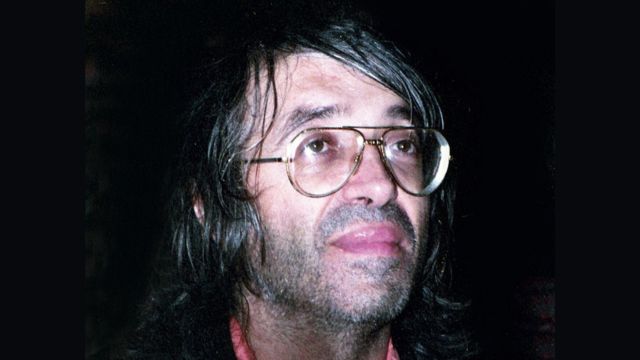 Gregorian Bivolaru.
I study fairy tales and their influence on Western esotericism and both romantic and modern art. However, fairy tales have a symbolic truth, which should not be confused with factual truth.
After he was put on the Interpol most wanted list by the Finnish authorities in October 2017, Bivolaru became a fugitive and the police of several countries were hunting him. That a small private anti-cult group, Hugues Gascan’s GéPS discussed in previous articles of this series, found and framed him, succeeding where Interpol had failed, belongs to the category of fairy tales.
According to Gascan, the methodology he and his “group of friends” used was very simple. They contacted non-French women who were telling the cloak-and-dagger story of how they were brainwashed in their countries where they attended MISA courses, invited to go to Paris, received and blindfolded by drivers in Paris, and taken to locations in France where they were compelled to have sex with Bivolaru. While readers of French media are led to believe that this was the result of a Sherlock-Holmes-like work by GéPS, these stories had been known for years. The late Swedish scholar Liselotte Frisk encountered them—and found them hard to believe—when she investigated the Finnish case in 2018. Some of the women who told these stories spread them through the Internet, wrote books, and were involved in civil cases with Bivolaru’s organization. I discussed their narratives in my own 2022 book about MISA. There was nothing new about them, except the claim that on November 28, 2023 several women were held captive in France to be abused by Bivolaru—a story as far as I know none of the women reportedly “liberated” by the police has confirmed so far.
Behind the Bivolaru Case. 3. Enter the MIVILUDES
The French anti-cult governmental agency played a crucial role in persuading those who were against other Tantric groups that they should focus on MISA.
by Massimo Introvigne
Article 3 of 4. Read article 1 and article 2.
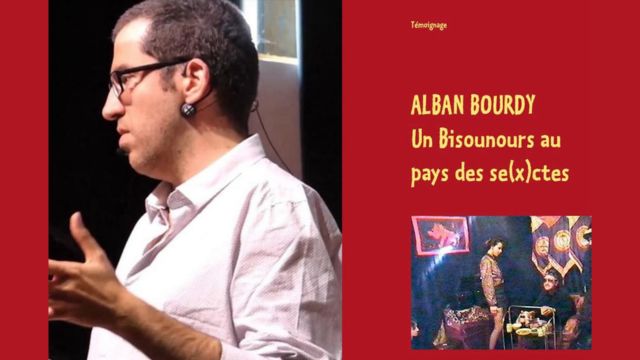 Alban Bourdy and his self-published 2018 book. From Facebook.
In the last article of the series, we discussed the court case Hugues Gascan lost again his colleague P.J., whom he had accused of being part of a “sex cult” led by Canadian independent Tantric teacher Jean Bouchart d’Orval.
We have a precious if biased document about what happened next: the autobiographic book self-published by an ex-member, turned anti-cultist, of the Soledad Domec schismatic branch of Ashram Shambala called Alban Bourdy (“Un Bisounours au pays des se(x)ctes ,” Norderstedt: Book on Demand, 2018). Having emerged as a public critic of Soledad Domec and the groups inspired by Rudnev, Bourdy received a phone call from Gascan in 2015 (p. 391). The latter followed up with a second call in December 2015, where according to Bourdy he wanted the two of them to join forces to expose the Tantric groups. However, Gascan was still so obsessed by P.J. that he accused Bourdy of being in touch with her (p. 393).
The Rule of Law, Freedom of Religion or Belief, and the Tai Ji Men Case
The expression “rule of law” was first used in the 17th century in connection with freedom of religion or belief. This connection is still crucial today.
by Massimo Introvigne*
*A paper presented at the 2024 Judicial Day Forum “Review and Vision of Judicial Independence: The Tai Ji Men Case,” National Taiwan University, Taipei, January 9, 2024.
 Samuel Rutherford (1600–1661) coined the formula “rule of law.” Credits.
Taiwan’s Judicial Day 2024 commemorates the anniversary of the fateful date of January 11, 1943, when the Republic of China (R.O.C.) entered into a new treaty with the United States and the United Kingdom, making R.O.C.’s judicial system completely independent from any foreign jurisdiction. It is a day when Taiwanese proudly reflect on the rule of law.
It is interesting to note that the idea of the “rule of law” first emerged in connection with freedom of religion. The first known use of the expression “rule of law” was by a Church of Scotland minister, Samuel Rutherford, in 1644. Scotland had a Presbyterian church with a Calvinist theology, which was very different from the Anglican doctrine and organization of the Church of England.
King Charles I, to better control religion in the United Kingdom, tried to merge the Church of England and the Kirk, as the Church of Scotland was called. In practice, this merger meant that the Church of Scotland would be compelled to accept Anglican ideas and practices foreign to its tradition. The King’s project generated widespread opposition in Scotland, where a National Covenant was signed in 1638 to defend the freedom of the Kirk to define its own theology and organization. In time, the confrontation escalated from ideological to military and inaugurated the time of civil wars in the United Kingdom.
Behind the Bivolaru Case. 2. GéPS, the Strange Origins of a French Anti-Cult Group
by Massimo Introvigne
Few had heard of a new anti-cult association that claimed credit for the arrest of the MISA founder in France. The story of its founder Hughes Gascan is not without interest.
by Massimo Introvigne
Article 2 of 4. Read article 1.
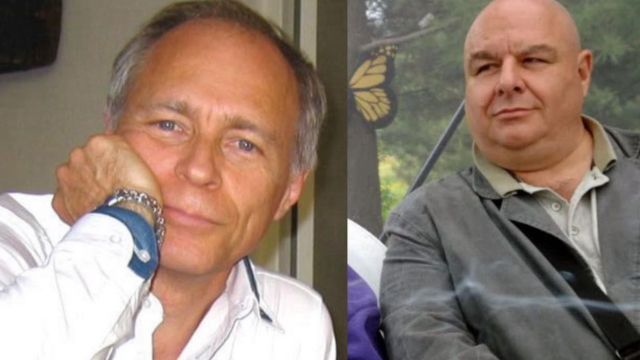 Jean Bouchart d’Orval (left, from Facebook) and Éric Baret (right, from X), two independent teachers of Tantra who were targeted by the anti-cultists.
After Romanian yoga teacher Gregorian Bivolaru was arrested in France on November 28, 2023, media started reporting that a small private anti-cult organization founded in 2022, called GéPS (Groupe d’étude du phénomène sectaire, Study Group of the Cult Phenomenon) had a crucial role in the investigation that led to the police raid. While the anti-cult ideology in general and French anti-cult movements in particular have been studied by scholars such as Susan Palmer and even exposed as dangerous for religious freedom by the U.S. Commission on International Religious Freedom, GéPS was almost unknown before November 2023.
To understand its curious history, one premise is needed. Tantric teachings, both in India and in their “neo-Tantra” Western version, encompass a wide variety of subjects and reducing them to their theories about sacred eroticism is a caricature. Yet, it is also true that sacred eroticism is part and parcel of Tantra, and its scholars warn against attempts to “sanitize” it by eliminate references to erotic practices.
Behind the Bivolaru Case. 1. Some Incorrect Reports About MISA’s Past History
by Massimo Introvigne
After the arrest of the Romanian yoga teacher in France, the same fake news about his and MISA’s past were reproduced from one media to another.
 Gregorian Bivolaru with students at the International Esoteric Yogi Summer Camp, Costinești, 1998.
On November 28, 2023, Gregorian Bivolaru, the founder of the Romanian esoteric movement MISA (Movement for Spiritual Integration into the Absolute), was arrested in France together with several followers (most of whom were later released), and the group’s ashrams in France were raided together with private homes of devotees. The police claimed it had liberated several women who had been kept prisoners and sexually abused by Bivolaru.
I am the author of the only scholarly book about MISA, which has been favorably reviewed in scholarly journals as an approach to the subject “in rigorous sociological terms,” and of the entry on MISA in the main academic encyclopedia of religious movements. Obviously, I was interested in the sensational developments in France. There are not many information on the charges against Bivolaru in the French case. I am aware that other scholars are investigating the matter, and “Bitter Winter” hopes to be able to report on their research in due course. In general, I would only repeat here my general position on leaders of new (and old) religions accused of sexual abuse and their victims. If they are guilty, religious leaders should be punished according to the law and cannot invoke religious liberty as an excuse for their crimes. This applies to Bivolaru as it applies to Catholic priests accused of pedophilia. The real victims deserve our solidarity.
NETFLIX – A TOOL FOR ANTI-CULTS?
by Camelia Marin
Making a short research on the angles that Netflix takes in its documentaries about spiritual movements, we can notice that Netflix follows playbook of anti-cult movement to make all new religious movements look bad.
In May this year was published an interesting article named: „Is Netflix a Threat to Religious Liberty?” by Dr. Massimo Introvigne https://bitterwinter.org/is-netflix-a-threat-to-religious-liberty/, in which he present about „Sensational TV series about religious leaders sentenced for sexual abuse are broadcast without considering that they wreak havoc in the lives of their innocent followers.”
A step in finding the truth is to raise an interest on the subject, watching the series produced by Netflix.
Are these series just another way of raising scandal, sensational, drama, etc., without caring about real people? Does Netflix become a tool in spreading information that can affect lives of spiritual practitioners?
The article mentioned above refers to members of different spiritual communities, such as Providence, of the Mexican megachurch La Luz del Mundo, of the Czech Guru Jára Path, of the Buenos Aires Yoga School in Argentina which either lost their job or had serious problems in their workplaces. The same happened to "devotees of Shincheonji in South Korea after the accusation (later declared false by the local Supreme Court) that their religious movement had willingly spread the COVID-19 virus, or members of the Unification Church/Family Federation in Japan."
The Netflix platform offers an abundance of new and exciting series, saying that „Documentaries and docuseries about cults expose not only their warped power dynamics and chilling secrets, they also explore the voices and lives of those involved.”
It is easy to find the documentaries about spiritual communities and leaders, just search “Documentaries on cults” and already some titles, and their short explanation pop up.
Several of such series are based on apostates, former students’ statements, and they play around a subject. The easy way to sell and make it sensational and scandal is about sexual abuse.
In such series, one or more women claim, in some cases many years after the facts, that they had consensual sexual relationships with the leaders, but they gave their consensus because they were “brainwashed” by the religious movements.
Is Netflix a Threat to Religious Liberty?
Sensational TV series about religious leaders sentenced for sexual abuse are broadcast without considering that they wreak havoc in the lives of their innocent followers.
by Massimo Introvigne
 Source: https://bitterwinter.org/is-netflix-a-threat-to-religious-liberty/
Posters for the Netflix series “In the Name of God.” From Twitter.
Last month, I interviewed in Australia a young girl I would call Grace (not her real name). A brilliant company executive with an unimpeachable curriculum, she had just been called by her employer and asked just one question, “Are you still a member of Providence Church?” When she answered yes, and added she did not plan to leave the church in any foreseeable future, she was immediately fired.
The employer had known for years that Grace was a member of the Providence Church, and that the church leader had been sentenced for sexual abuse, as the story had been reported in Australian media. However, he decided to fire her after a Netflix TV series on Providence and its leader had gathered millions of viewers.
I collected similar stories in several countries. Members of Providence, of the Mexican megachurch La Luz del Mundo, of the Czech Guru Jára Path, of the Buenos Aires Yoga School in Argentina either lost their job or had serious problems in their workplaces. The same happened to devotees of Shincheonji in South Korea after the accusation (later declared false by the local Supreme Court) that their religious movement had willingly spread the COVID-19 virus.
Members of the Unification Church/Family Federation in Japan went through the same ordeal after the assassination of former Prime Minister Shinzo Abe by a man who claimed that the church, to which Abe was friendly, had ruined his mother, who is still a member. Although the dynamics are similar, I will focus here on cases where the leaders have been accused of sexual abuse, rape, or inducing members to prostitution.
Why Secularism Is Dangerous. 1. An Outrageous Crime in France: Kids Pray
Recent events confirm France’s stubbornness in preventing any public manifestation of religions. To get the work done, secularism mobilizes state teams aimed at re-educating children in schools.
The city of Nice is home to “a number of extremely serious facts, which took place in several buildings” (“plusieurs faits extrêmement graves qui se sont produits dans différents établissements”). This is what Christian Estrosi, mayor of the Côte d’Azur pearl, in Mediterranean France, wrote in a June 15, 2023, letter to French Prime Minister Élisabeth Borne. What that “number of extremely serious facts,” worth a national alarm and the public denunciation by the authorities, was? A few children, aged 9 to 11, prayed.
Religious liberty is threatened all over the world in different ways, grades, and shapes. In democratic societies the persecution is often indirect. It may be of an administrative or fiscal kind, as the case of Tai Ji Men in Taiwan shows. Sometimes, it is cultural. Tolerant France may become intolerant, as the paradigmatic case of Nice proves.
In some schools some children “prayed according to the Muslim rituals in the courtyard” of the schools they attend(ed), “or managed to observe a minute of silence in memory of the prophet Muhammad” (“ont fait la prière musulmane dans la cour de leur établissement ou ont organisé une minute de silence à la mémoire du prophète Mahomet dans leur école”). In detail, on May 16, 10 pupils of Saint-Sylvestre elementary school in northern Nice and three on June 5 in Fuon Cauda elementary school, in the center of the city, prayed before lunch. On June 8, a child in a third elementary school, Bois de Boulogne in Nice’s Moulins neighborhood, organized a silent remembrance of Prophet Muhammad, as the French daily “Le Figaro” and state-owned Radio France reported. Moreover, also in Nice, three students prayed in a secondary school, the Collège Picasso de Vallauris-Golfe-Juan, and a girl wore the “abaya,” a traditional robe used my Muslims especially in the Arabian Peninsula, in the Estienne d’Orves high school. The three students were excluded permanently from the schools, and the girl suffered the same fate for five days.
Religious Liberty Problems and Discrimination of “Cults” in Eastern Europe: The Case of Romania
CESNUR conference - 2023, Vilnius
By Camelia Marin
The struggle for religious liberty has been ongoing for centuries, and has led to innumerable, and often tragic, conflicts. The twentieth century saw the codification of common values related to freedom of religion and belief in numerous international treaties, declarations, and conventions.
The United Nations recognized the importance of freedom of religion and belief in the 1948 Universal Declaration of Human Rights, Article 18. Similar provisions can be found in Article 18 of the International Covenant on Civil and Political Rights, as well as other regional and specialized human rights instruments. However, attempts to develop an enforceable, binding document specifically related to the freedom of religion and belief have been unsuccessful.
After twenty years of debate, intense struggle, and hard work, in 1981 the General Assembly made strides towards achieving the goal of introducing a treaty on freedom of religion and belief, adopting (without a vote) the Declaration on the Elimination of All Forms of Intolerance and Discrimination Based on Religion or Belief (1981 Declaration). While the 1981 Declaration lacks any enforcement procedures, it remains the most important contemporary codification of the principles of freedom of religion and belief.
Religious tolerance and pluralism made great gains in Western Europe after World War II and in Eastern Europe after the Cold War.
The end of the Cold War in 1989 "liberated" religions in Eastern Europe from Communist restraints. It opened up new possibilities for minority religions and unprecedented freedom of religion and conscience.
Living Together in Peace and the Tai Ji Men Case
from Bitter Winter - A magazine on religious liberty and human rights
On U.N. International Day of Living Together in Peace, scholars and human rights activists called for acknowledging injustice and restoring justice for Tai Ji Men.
by Daniela Bovolenta
 The poster of the webinar.
On May 16, 2023, United Nations International Day of Living Together in Peace, CESNUR and the Brussels-based NGO Human Rights Without Frontiers co-organized one of their bi-monthly webinars about the Tai Ji Men case, under the title “Will Tai Ji Men Finally Be Allowed to Live Together in Peace?”
Karolina Maria Hess, a researcher at Jagiellonian University in Krakow, Poland, introduced the webinar and a video on the history of the International Day of Living Together in Peace. It was included among the U.N. international days of observance in 2017, the video explained, but the original initiative came from Sheikh Khaled Bentounès, the head of the Algerian branch of the Muslim Sufi brotherhood Alawiya.
16 May - International Day of Living Together in Peace
Webinar - Will Tai Ji Men Finally Be Allowed to Live in Peace?
On 16 May 2023, CESNUR and Human Rights Without Frontiers co-organized a webinar about the Tai Ji Men case, under the title “Will Tai Ji Men Finally Be Allowed to Live Together in Peace?”
Soteria International, represented by Camelia Marin, contributed by expressing the concern about the Tai Ji Men case and the endless bureaucracy that is affecting the spiritual community:
United Nations Declaration refferes to International Day of Living Together in Peace as "Working together with religious leaders to promote tolerance and understanding among human beings"
For a spiritual community to live in peace means that all its environment, social and political.
The community is created by individuals. Many factors are influential in the formation of the individual personality. Families and media, as well as cultural and religious communities themselves, should support the development of open-minded individuals, capable of critical thinking and of constructive dialogue with others.
Education is combating ignorance, breaking down stereotypes, building trust and mutual respect and promoting sincere support for the shared values of living together.
For this, institutions of the states develop projects in collaboration with religious communities to promote shared values and “living together”.
In Taiwan, we can see among others, the example of Tai Ji Men spiritual community and their participation to national and international events, calling for Love, Peace, Conscience, helping people unite in the hearts and encouraging the search for their inner peace and harmony.
Still, we can notice situations when national or international institutions obscure the responsibilities of government for upholding human rights, and create obstacles to calling human rights-violating states to account.
Spiritual yoga teacher persecution
An overview of the ongoing persecution of yoga teacher Mr. Gregorian Bivolaru
 Throughout different political systems, social environments and times, the persecutions we will point out in the following document are rooted in one common denominator: being a yoga teacher – meaning the target becomes the person and the group that is different from the mainstream.
Historical facts that prove the continuation of the unceasing, abusive persecution of the yoga teacher Mr. Gregorian Bivolaru
It is a well-known fact that the practice of fraud in official matters was a widespread menace in the post-war Romania dominated by the communist regime.
Beginning with 1982, as a result of an ideological purge ordered by communist dictator Nicolae Ceausesu, all oriental spiritual practices such as yoga or martial arts were banned in Romania and the people teaching them were outlawed. On 27th August 1982, the National Bureau of the Executive Committee of the National Council emitted order 1253 by which all yoga and martial arts courses and practices were banned in any public place. The risks of being caught were many years in labour camps or imprisonment in very tough conditions. The trespassers were frequently discredited in the mass media and among their co-workers. This tactic was thoroughly documented by the researchers who studied the communist era.
Despite this situation, and not wanting to give in to threat and persecution, yoga teacher Mr. Gregorian Bivolaru continued to clandestinely teach yoga, therefore, facing severe consequences. In his views, helping people to achieve better health and quality of life should not be stopped for political reasons. He was arrested for the first time in 1984 and beaten; the books he had obtained with great sacrifice were confiscated on several occasions, never to be returned to him.
Communism and its regime ended in Romania in 1989 with a bloody revolution, after which a new era started for the country. However much of the communist nomenclature survived and metamorphosed into the people occupying key positions in the newly installed power of Romania.
The same political metamorphosis happened with the military and police officers who were in charge of the persecutions of the yoga movement and Mr. Gregorian Bivolaru.
A Historian Looks at the Controversies About MISA (the Movement for Spiritual Integration into the Absolute)
by J. Gordon Melton
MISA’s teachings may appear new and shocking but they are based on ancient doctrines such as Chinese alchemy, Tantra, and Western Esotericism.
by J. Gordon Melton*
*Transcript of a speech at the webinar of April 27, 2022, introducing Massimo Introvigne’s book “Sacred Eroticism: Tantra and Eros in the Movement for Spiritual Integration into the Absolute (MISA).” The spoken style has been preserved.
I have read Massimo Introvigne’s book “Sacred Eroticism: Tantra and Eros in the Movement for Spiritual Integration into the Absolute (MISA)” (Milan and Udine: Mimesis International, 2022), as a historian. I am familiar with MISA and its legal and other problems over the years.
MISA is being dismissed as a new, non-traditional, and less than serious religious community. It has been argued that it is not even a religious community at all, but a secular group that is presenting its teachings with a religious façade, so that it can practice anti-social activities under the guise of a religion, and thus, get away with them because of our love for religious freedom.
At its worst, MISA would be dismissed as a sex cult, at best as a group living under the shadow of its founder, wishing to spread sexual immorality under various pretexts.
As I approached MISA, I see it is somewhat different, in fact almost completely different. It has adopted and propagates some very ancient religious ideas, actually drawing teachings from three older traditions that have been amalgamated into one. These three traditions are South-Asian Tantric teachings, Chinese alchemical teachings, and Western Esotericism.
UN - Zero Discrimination Day
On Zero Discrimination Day, scholars, human rights activists, and Tai Ji Men dizi discussed discrimination problems in Taiwan and internationally.
Source: https://bitterwinter.org/zero-discrimination-against-tai-ji-men/
On March 1, 2023, United Nations Zero Discrimination Day, CESNUR and the Brussels-based NGO Human Rights Without Frontiers organized one of their bi-monthly webinars, with the title “Zero Discrimination for Tai Ji Men.”
Willy Fautré, co-founder and director of Human Rights Without Frontiers, mentioned the international treaties calling for the elimination of all discriminations. These treaties, he said, unfortunately did not prevent discriminations to continue, even in democratic countries, particularly in the field of freedom of religion or belief (FoRB). In several European countries, minority groups and the more so those stigmatized as “cults,” are discriminated from the legal and tax points of view. The same, Fautré noted, has happened in Taiwan with Tai Ji Men.
The Universality of Human Rights and the Tai Ji Men Case
HUMAN RIGHTS DAY – 10 DECEMBER 2022
Those who claim that human rights are not universal usually are those who do not respect them.
by Massimo Introvigne
*Conclusions of the webinar “Tai Ji Men: Fighting for Human Rights,” co-organized by CESNUR and Human Rights Without Frontiers on December 10, 2022, Human Rights Day.
 Photo - Police confront protesters in Iran. Photo by Ebrahim Noroozi, Farsnews. Credits.
This year, Human Rights Day is celebrated right in the middle of some of the most heated discussions on human rights in recent years. On August 31, the Office of the UN High Commissioner for Human Rights released a report accusing China of gross human right violations and what it called “crimes against humanity” in Xinjiang.
Several European countries have asked for an international tribunal that would judge the Russian war crimes in Ukraine, similar to the Nuremberg tribunal that judged Nazi leaders after World War II. The World Cup of soccer is now taking place in Qatar, and several Western teams have tried to use the tournament as an opportunity to publicly protest the violations of human rights in Qatar and other countries with an Islamic majority, including Iran.
TAI JI MEN – FIGHTING FOR HUMAN RIGHTS
HUMAN RIGHTS DAY – 10 DECEMBER 2022
New paradigm of solving conflicts - raising from the mind, in the heart. Love, Peace, Conscience.
By Camelia Marin
See whole webinar here https://www.youtube.com/watch?v=1Qz2UZB2Bzo 
On the Human Rights Day, in order to fulfil our purpose which is to see the human rights respected all over the world and the human kind being genuinely humane, I would like to start with the necessity of unifying minds and hearts – which is the key element to be taken into consideration both for the individual spiritual evolution and for the social evolution seen from a holistic perspective.
As we can see, Tai Ji Men practice encourages all of us to experience states like love, peace and conscience, which, in their view, should be there in order to become a harmonious society and to raise our level of consciousness.
In one way or another, we need to shift from the old paradigm of solving conflicts – which didn’t take into consideration the already existing state of unity, created by both sides of the conflict being on the same level, of the mind, and which, thus, was in itself a seed of conflict – to a new paradigm, of surpassing the level where conflicts appear, by engaging the hearts in this process.
Validated nowadays by the newest discoveries of science, this new paradigm of conflict management is based on the concept of Concordia or coherence of the hearts.

